A LITTLE LOOK INSIDE
Mind & Wellness
The Art of Slow Living
Find joy in the little things.
An invitation to step out of the rush. Explore simple rituals, mindful spaces, and small moments that make an ordinary day feel a little more beautiful.
- 10 practical chapters
- 10 reusable worksheets
- Four-week practice plan
- Format
- PDF ebook
- Length
- 64 pages
- Language
- English
- Price
- US$10.00
Checking availability…
Explore other booksWHAT YOU RECEIVE
Everything included with your ebook.
A complete digital edition designed for reading, reference, and practical use.
BEYOND THE LAST PAGE
A guide you can put to work.
Find your starting point
Begin with “Choose the pace the moment needs”. Read the lesson before moving into the practical session.
Make one useful attempt
Choose one recurring transition in your day and identify a small adjustment that would make it less rushed.
Keep what helps
Use the 10 worksheet pages to record decisions, then return to the four-week practice plan when you want a little structure.
Who this ebook is for
Readers looking for practical reflections on everyday pace, spaces, and commitments without an idealized lifestyle overhaul.
Revised and expanded edition. Ten chapters, five in-depth worked lessons, an integrated practical project, a subject glossary, ten worksheets, and a four-week plan.
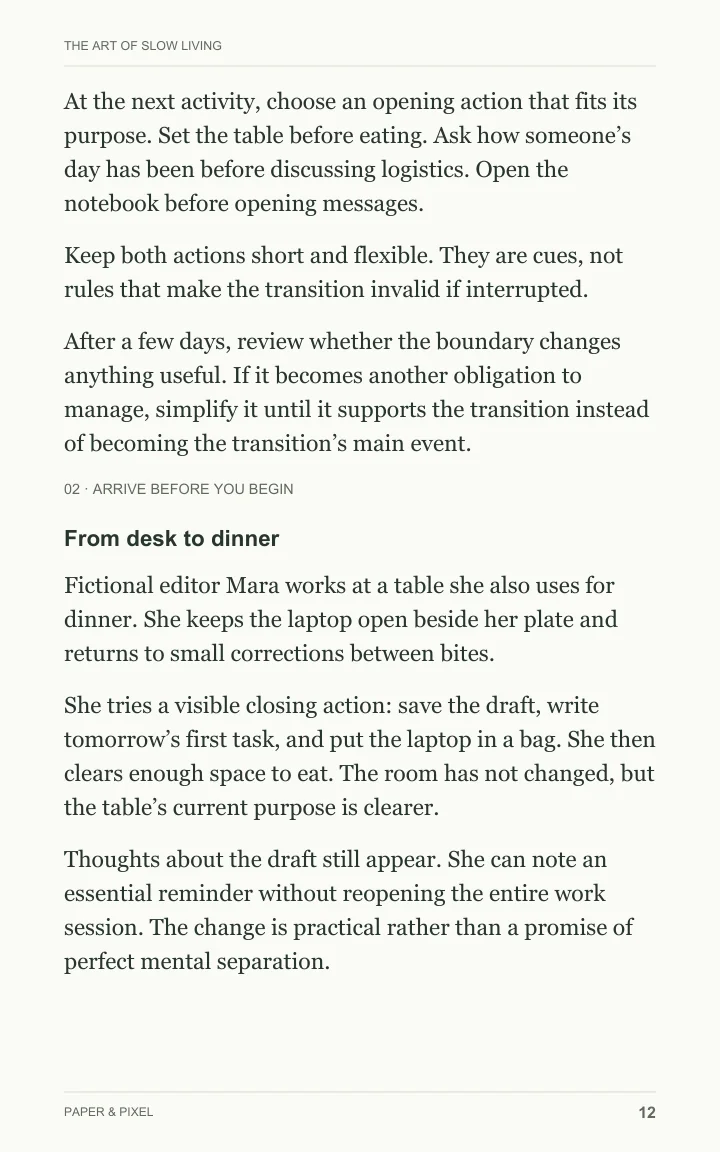
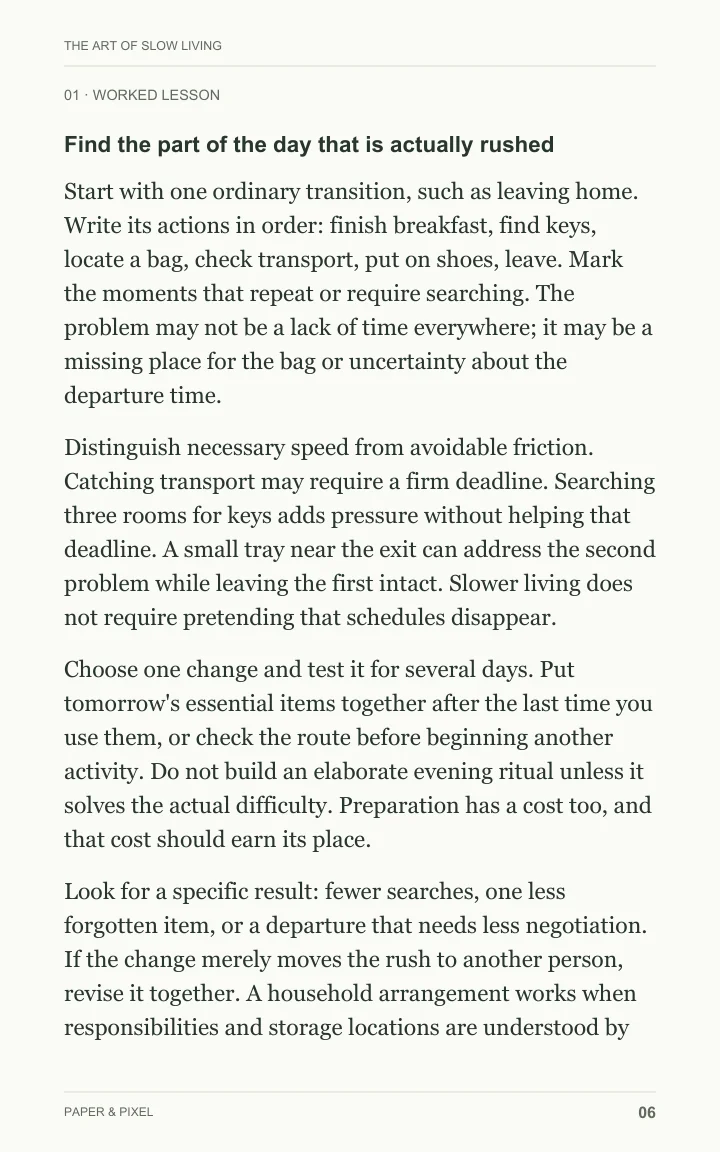
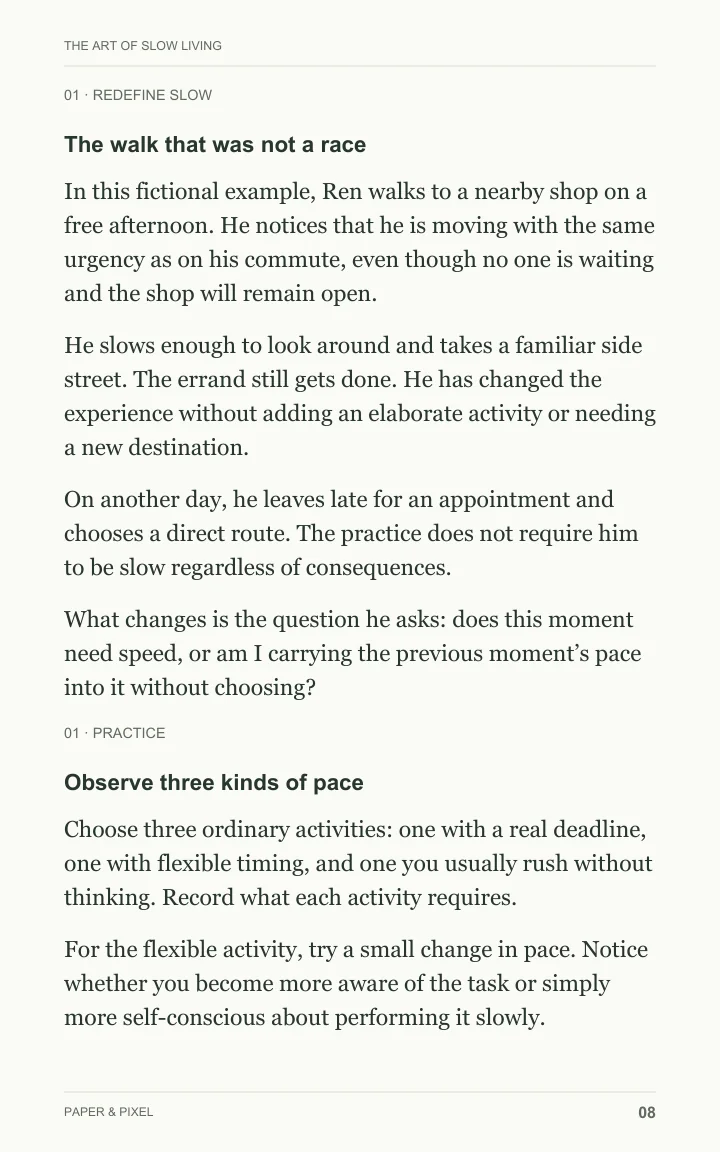
Read an excerpt
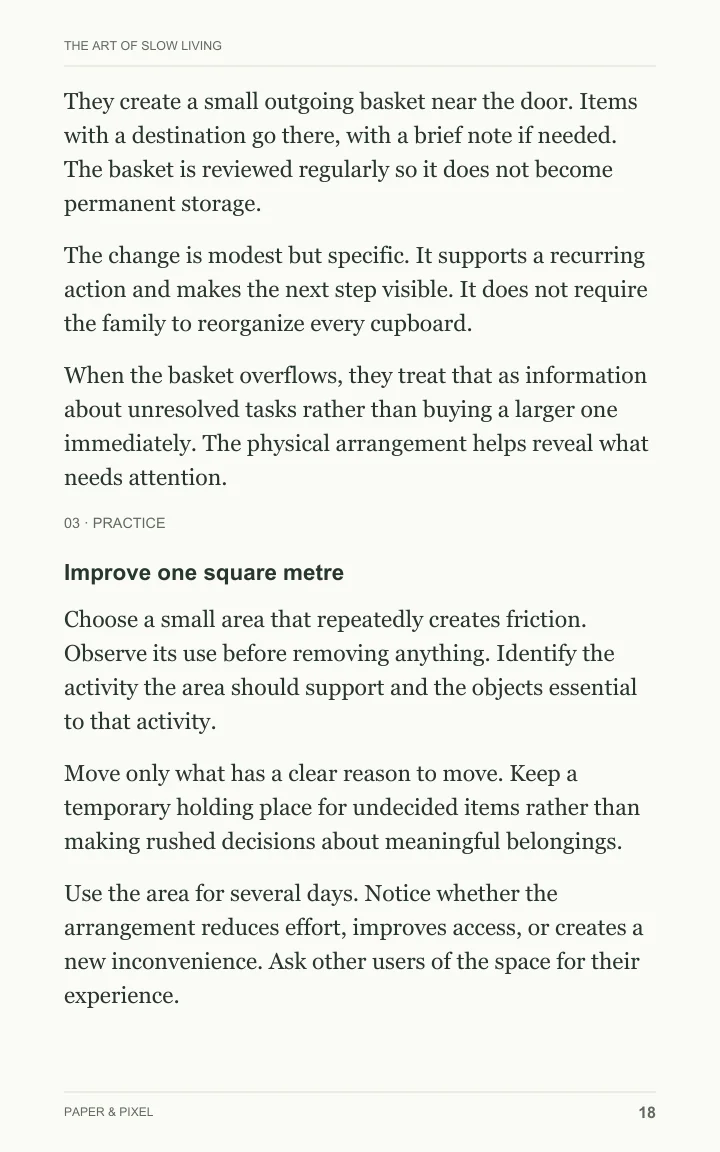
Slowness is useful when it lets you notice, decide, or enjoy something that hurry would obscure. It is less useful when it becomes a rigid rule that ignores the situation. The skill is choosing pace with more awareness.
Inside the book
- Choose the pace the moment needs
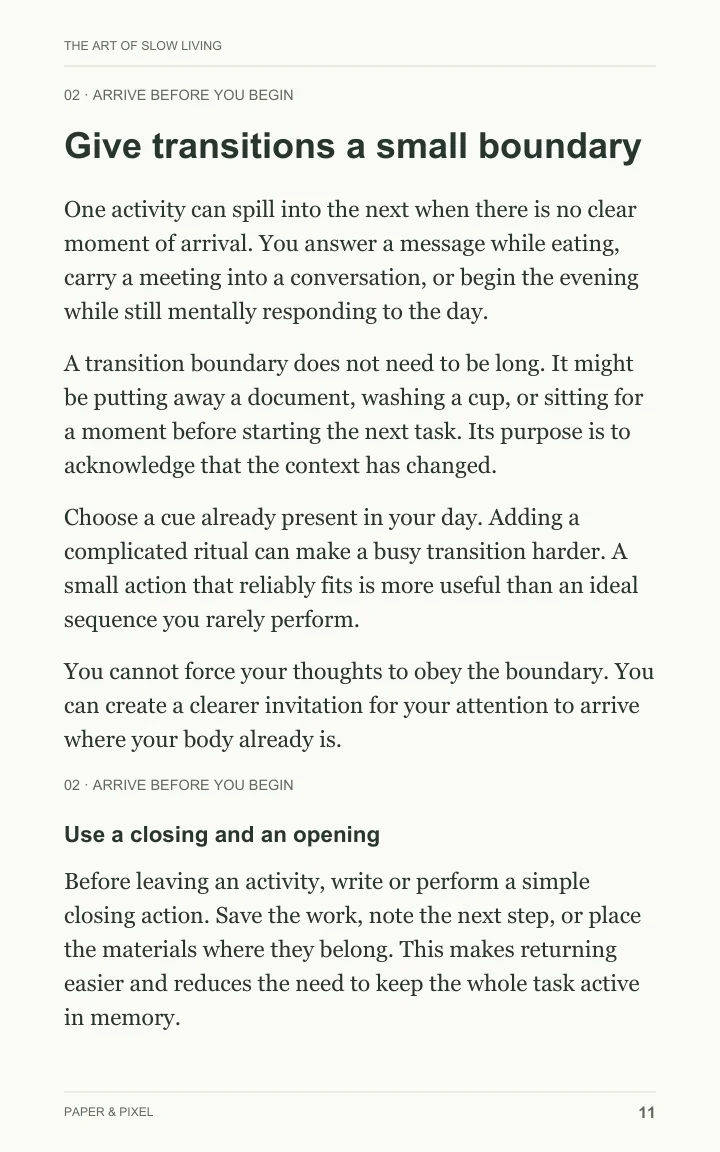
- Give transitions a small boundary
- Arrange for use, not display
- Let an ordinary detail become specific
- Reduce decisions that add little
- Rest does not need a result
- Presence can be practical
- Ask what the object will do
- A rhythm can be flexible
- Choose what deserves to remain
Also included: 10 reusable worksheets and a four-week practice plan. Page counts include the cover, front matter, worksheets, and editorial notes.
Worked lessons and a complete project
The expanded edition develops the chapter ideas through these detailed lessons:
- Find the part of the day that is actually rushed
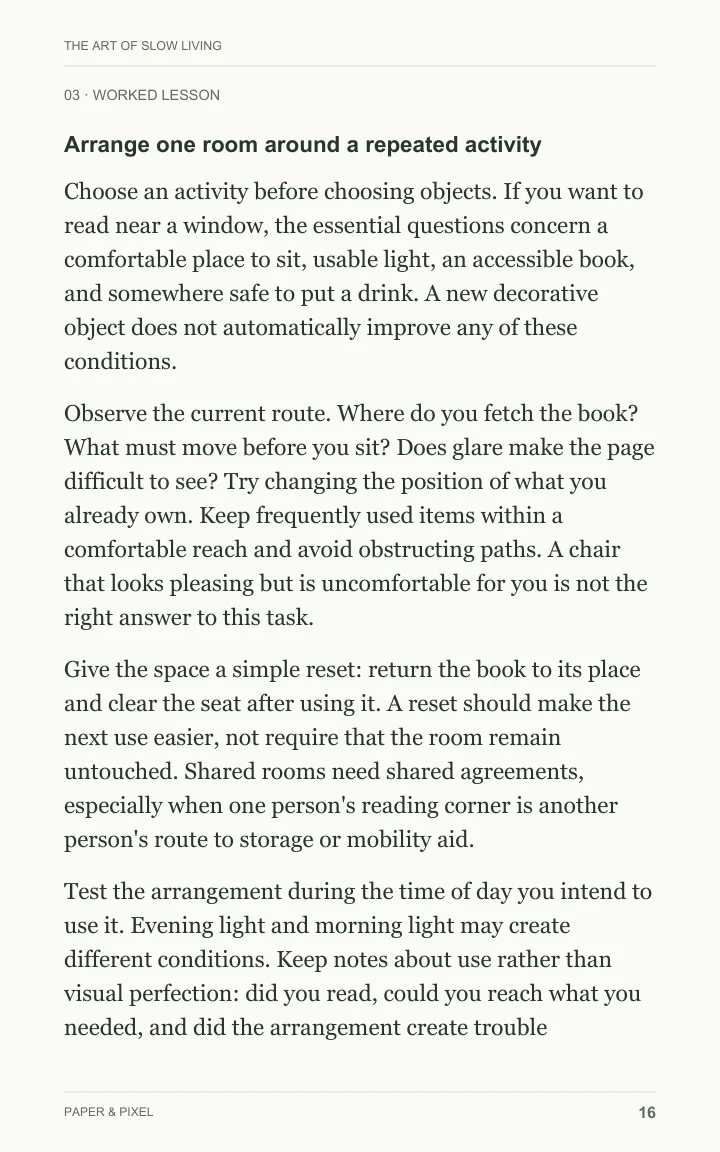
- Arrange one room around a repeated activity
- Build a flexible ordinary evening
- Make shared attention a practical agreement
- Use a seasonal review without buying a new identity
Apply the ideas together
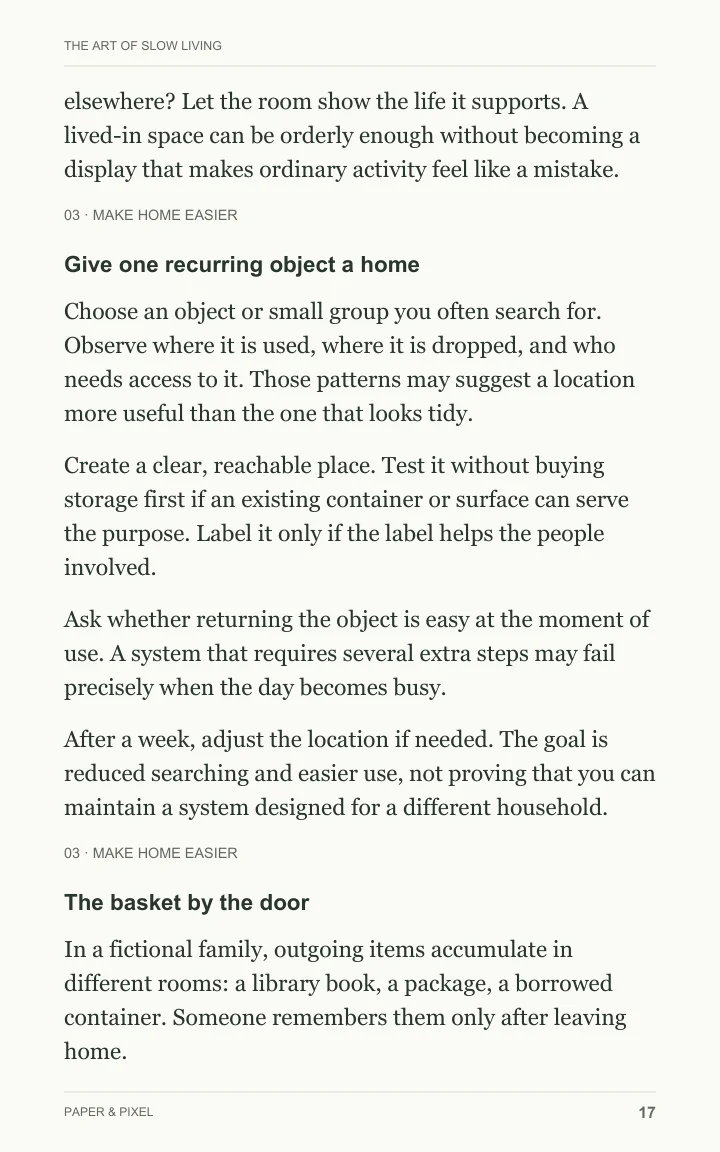
- Make one ordinary meal less hurried
- Create an attention ritual from something already present
- Negotiate a shared household rhythm
A subject glossary provides a quick reference while you work.
A small exercise to begin
Choose one recurring transition in your day and identify a small adjustment that would make it less rushed.
Edition and reading notes
Original editorial content. The PDF uses a fixed page layout with printable worksheet lines; it is not a fillable form or reflowable EPUB. No independent specialist review is claimed. Read our editorial policy.
This reflective workbook is not mental-health treatment. Adapt or skip exercises that do not suit you and use appropriate professional support when needed.
Keep following the thread.
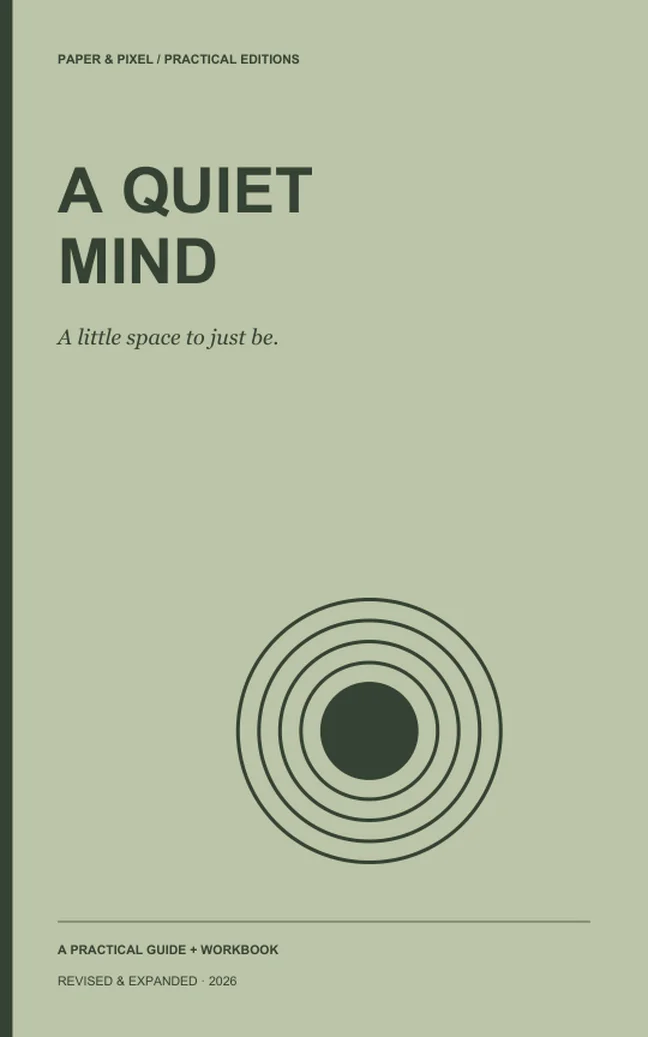
Mind & Wellness
A Quiet Mind
A little space to just be.
Read the sample & details ↗READER PERSPECTIVES
The reading experience.
Busy professional
“The structure feels calm and easy to follow. I would use the first worksheet before beginning a new project.”
Independent creator
“The strongest part is how quickly the ideas become usable. The chapter on “Give transitions a small boundary” would be especially useful in a busy week.”
Curious beginner
“This reads like a thoughtful workshop rather than a long lecture. It feels designed to revisit, not just finish once.”
Weekend learner
“The chapter sequence makes the subject feel approachable. The exercise is specific enough to try without extra tools.”
Practical planner
“The examples keep the advice grounded in ordinary decisions. A reader could comfortably complete this in short sessions.”
Reflective reader
“The worksheets give each chapter a clear next step. The examples make the limits of the advice easy to understand.”
Small-team lead
“The tone is encouraging without promising an instant transformation. I like that the book leaves room for personal judgment.”
Habit builder
“The fixed-page design makes this pleasant to read and annotate. The printable pages would make a useful working companion.”
Visual thinker
“The short sections work well for focused reading sessions. The progression from observation to action feels natural.”
Note-taking reader
“The book respects the reader’s time and still explains the reasoning. This would suit someone who wants a concrete starting point.”
Self-directed learner
“The practical prompts help turn reflection into a useful experiment. The language stays clear even when the subject becomes detailed.”
Project starter
“The final project brings the separate lessons together clearly. The closing practice gives the book a satisfying sense of direction.”